VI
VI
 EN
EN





Strategy to develop Vietnam's steel industry to 2030, with a vision to 2050
Table Of Contents
Table Of Contents
According to preliminary forecasts, the total market demand for Vietnam's manufacturing industries from now to 2030 may reach 310 billion USD. This will be a large market for the domestic steel industry, especially high-quality fabricated steel and alloy steel for the manufacturing industry, which is a segment that Vietnam currently cannot control in domestic steel production.
The Ministry of Industry and Trade has just issued a report No. 2152/BCT-CN on a proposal "Strategy to develop Vietnam's steel industry to 2030, with a vision to 2050." The report shows that, by 2021, Vietnam's billet production capacity was 27 million tons/year, of which hot-rolled coil (HRC) is 7-8 million tons/year.
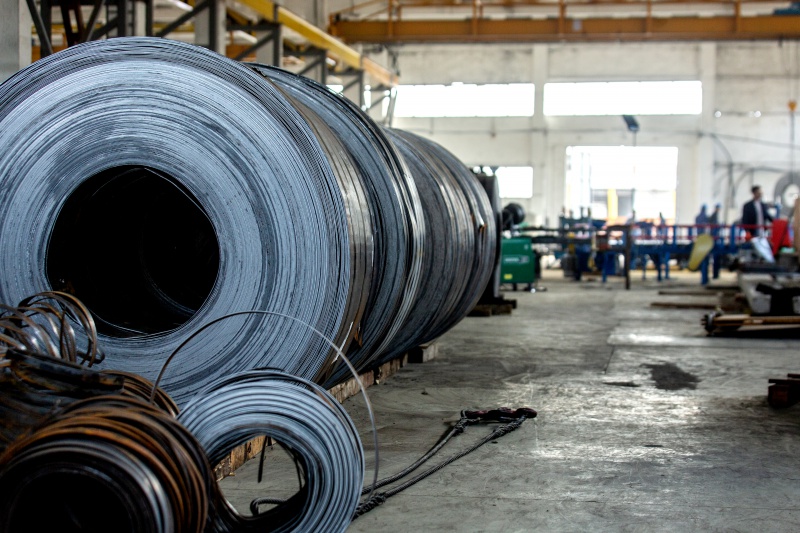
However, there are only few new factories with large capacity such as Hoa Phat Dung Quat iron and Steel Complex, Hung Nghiep Formosa Iron and Steel Complex, Nghi Son Steel. The remaining steel billet factories mainly have small capacities and outdated equipment. Steel production capacity is limited and cannot supply enough steel demand for the whole economy.
According to the Ministry of Industry and Trade, the competitiveness of Vietnam's steel industry is low when most of the input materials for steel production must be imported. Following forecasts, in 2022, Vietnam has to import many types of materials to produce steel, such as iron ore for blast furnaces (about more than 18 million tons), scrap steel (about 6-6.5 million tons) for electric furnaces, metallurgical coal (about 6.5 million tons) and graphite electrode (about 10,000 tons). The forecast is that the price of iron ore, scrap steel, raw material ore, and coking fat coal will remain at a high level, which will directly affect the steel production business and domestic steel market.
The steel industry plays a particularly important role in the process of developing the country towards industrialization and modernization. This is the foundation industry, input materials for important economic sectors such as mechanical engineering and supporting industry. Therefore, for the steel industry to develop sustainably and stably, the Government needs to have strong enough policies to promote the development of the steel industry, creating a foundation for industrialization towards a modern and sustainable direction.