VI
VI
 EN
EN











Specialized Article on Organic Agriculture
Table Of Contents
Table Of Contents
Can I Use This Input for My Organic Farm?
Assessing input materials in organic production
Organic agriculture is a comprehensive management system that aims to enhance and promote the health of the agricultural ecosystem, including biological diversity, biological cycles, and biological productivity. Assessing input materials in organic production is one of the crucial steps to ensure the quality of the final products. Organic agriculture emphasizes managing cultivation activities, minimizing the use of external materials and inputs, and considering the conditions of each region and locality. Organic agriculture must meet long-term, sustainable, ecological, and systematic objectives, ensuring long-term soil fertility based on the biological characteristics of the soil. It minimizes (and avoids, if possible) the use of synthetic materials and inputs throughout the organic production chain to reduce exposure of humans and the environment to persistent or potentially harmful chemicals. It also minimizes pollution from production activities to the surrounding environment. Organic agriculture does not use technologies that lack natural origins (e.g., genetically modified products, radiation technology). It avoids contamination from the surrounding environment and maintains organic integrity throughout the production, processing, packaging, storage, and transportation processes. [2][3][4]
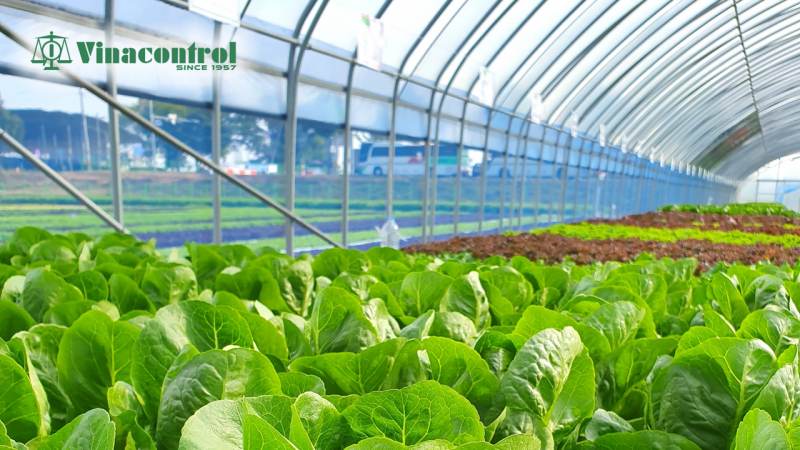
Organic agriculture encourages the use of preventive measures such as crop rotation, crop cover, hygiene practices, and organic production using only natural mineral fertilizers. The national standards for organic agriculture TCVN 11041-2:2017 require that only fertilizers and soil stabilizers listed in Annex A.1 be used if: these substances are truly necessary to achieve or maintain soil fertility, or to meet specific nutritional requirements for crops, or for the purpose of crop rotation and soil stabilization that cannot be fulfilled by the measures stated in 5.1.7; these substances are derived from plants, animals, microorganisms, or minerals obtained through physical methods (e.g., mechanical and thermal processes), enzymatic processes, or microbial processes (e.g., composting, fermentation); if the aforementioned measures are ineffective, then consideration can be given to using chemical methods, but only for extraction carriers and binding agents; the use of these substances does not negatively impact the ecological balance of the soil, the physical characteristics of the soil, or the quality of water and air; their use must be severely restricted under specific conditions.
The conditions for using plant protection products are regulated in Appendix A of TCVN 11041-2:2017 on organic agriculture in Vietnam. According to this, only plant protection substances (including those used to control pests, regulate growth, and treat seeds) listed in Table A.2 of TCVN 11041-2:2017 should be used if their use is truly necessary to control specific pests that cannot be effectively managed through biological, physical, or crop management measures. The use of these substances should consider their potential harmful effects on the environment, ecosystems (specifically non-target organisms) [5], human health, and livestock. The substances used must originate from plants, animals, microorganisms, or minerals, and may undergo processes such as physical methods (e.g., mechanical and thermal processes), enzymatic processes, or microbial processes (e.g., composting, decomposition). If the substances are synthesized chemically (e.g., pheromones used in insect traps), they are considered for inclusion in the list if there are insufficient natural products available, and their use does not result in residue levels in edible products. Their use must be severely restricted under specific conditions.
Currently, the majority of organic producers often question whether the input materials they purchase are allowed for use. It is challenging for most organic producers in Vietnam to select input materials that meet the requirements of organic agriculture standards and have reasonable costs. During the organic product certification process, certification organizations are responsible for evaluating the documents that producers/processors will use to verify compliance with the requirements of TCVN 11041. Therefore, you need to provide a list of all the input materials you are currently using or planning to use in your organic production plan to the certification organization. This will help determine whether these substances are permitted for use in organic production.
The significance of the list of permitted substances in organic agriculture
According to the national standard TCVN 11041-2:2017 on Organic Agriculture - Part 2: Organic Crop Production, we cannot use products with synthetic ingredients for organic production unless they are specifically allowed and listed in the permitted substances list defined by the organic agriculture standards. This means that synthetic materials cannot be used unless they are explicitly approved, and natural materials can be used unless they are specifically prohibited. The list of permitted substances in organic agriculture clearly specifies the restrictions on their use or provides specific annotations regarding their origin, description, and conditions of use.
Reading the information on the packaging label
The next step in the organic agricultural production process is labeling the product packaging. The permitted ingredients are those that are not synthetic and are included in the list of substances allowed for use in organic production according to specific standards. If there are synthetic ingredients, it is necessary to check if they are allowed based on the description and conditions of use. This can pose difficulties for organic farmers as the restrictions specified in the description and conditions of use may impose limitations on the production process or material usage. For example, Lidocaine is permitted for use as a local anesthetic, but its use must comply with withdrawal periods of 90 days for intended slaughter livestock and seven days for livestock used for milk production.
Reading the information on the packaging label of input materials is not sufficient to determine their suitability for organic cultivation. The information on the label often does not provide comprehensive details about the production technical process. For instance, liquid fish fertilizer is permitted for use as a fertilizer and can adjust the pH using sulfuric, citric, or phosphoric acid. However, the label information may not mention whether the acid concentration exceeds the minimum required level for pH adjustment. Or there may be multiple types of fertilizers labeled as "organic fertilizer" with added mineral components. For example, sulfur is only permitted if it is derived from natural sources. Therefore, organic producers should contact their suppliers to confirm the suitability of input materials for their organic farm. When contacting input material manufacturers, try to obtain written confirmation or at least record the information you receive. If you are unsure about the information you need, contact the certification organization for specific guidance.
Slow but steady!
Before using a new input material, you can refer to the recent approval from OMRI (Organic Materials Review Institute). If it is not listed, follow these steps:
-
Evaluate each component on the packaging to comply with the list of permitted substances in organic farming and any relevant annotations in the description and conditions of use. The OMRI general listing of materials can also be helpful.
-
Contact the manufacturer if necessary.
Since this process may take time, ensure you plan ahead before contacting the certification organization or updating your organic production plan. Therefore, it is advisable to plan in advance before making any contact. You should keep records of all communication with input material suppliers/manufacturers, certification certificates or compliance statements if possible. It is also recommended to retain labels, receipts, shipping invoices, and input material management records. Thorough verification ensures traceability throughout the organic production process and the ability to recall products by monitoring production data against organic standards. This instills consumer confidence in the authenticity and quality of organic products.
Lê Văn Hậu
Expert evaluation – Vinacontrol Hồ Chí Minh City
[1] Synthetic substance: A substance formed through chemical synthesis or chemical modification processes from materials derived from plants, animals, or natural mineral sources. (Substances produced through natural biological processes are not considered synthetic substances) - Point 3.4 of the National Standard TCVN 11041-1:2017.
[2] https://evbn.org/nong-nghiep-huu-co-thuc-trang-va-mot-so-huong-phat-trien-tai-viet-nam-1680487815/
[3] https://luatvietnam.vn/nong-nghiep/nghi-dinh-109-2018-nd-cp-ve-nong-nghiep-huu-co-166604-d1.html
[4] https://binhphuoc.gov.vn/vi/news/chien-luoc-du-an-quy-hoach/tieu-chuan-va-nguyen-tac-san-xuat-nong-nghiep-huu-co-22293.html