VI
VI
 EN
EN










Petroleum Products Inspection
Table Of Contents
Table Of Contents
Petroleum and petroleum products represent a high-value commodity group with complex technical specifications, making them highly susceptible to variances during custody transfer, storage, pumping, and transportation. Fluctuations in temperature, density, volume, quality, or contamination can lead to financial losses and disputes between parties.
Vinacontrol’s petroleum inspection services assist enterprises in independently verifying the quantity, quality, and condition of goods at each point of transfer. This controls risks, protects commercial interests, and provides a reliable basis for payment, customs clearance, insurance, or claim settlement.
Service Background
Inspection of petroleum and petroleum products is the assessment of a product's conformity with contracts, published applicable standards, or corresponding technical regulations through observation and evaluation of measurement and testing results.
Independent inspection serves as a basis for quality verification, risk control, and ensuring that petroleum and petroleum products meet technical and legal requirements before entering circulation or being put into use. Selecting a competent inspection body designated by competent authorities is a crucial condition to ensure the reliability and validity of the assessment results.
Vinacontrol’s services assists enterprises in:
✔ Precisely verifying the quantity and quality of delivered and received goods.
✔ Monitoring and controlling shortages/losses during storage, pumping, and transportation.
✔ Detecting risks of water ingress, impurities, sediment, or product cross-contamination.
✔ Reconciling the conformity of shipments against contracts and shipping documents.
✔ Providing an independent basis for payment, claims, and compensation.
✔ Meeting quality management and specialized regulatory inspection requirements.
Target Audiences
Vinacontrol provides independent inspection services for:
- Crude oil and condensate
- Mineral gasoline, biofuels, and commercial gasoline types
- Diesel fuel and biodiesel
- Kerosene and aviation fuel
- Fuel oil, furnace oil, F.O., and marine fuels (bunkers)
- Lubricants, lubricating oils, and industrial oils
- Liquefied Petroleum Gas (LPG), raw gas, and gas products
- Asphalt/Bitumen, solvents, and petroleum-derived chemicals
- Other petroleum products and liquid fuels
Scope of Services
1. Quantity Measurement and Determination
- Measuring liquid levels on vessels, cargo tanks, shore tanks, or storage tanks.
- Measuring temperature, density, and other parameters for conversion.
- Calculating actual volume and volume at standard temperature.
- Determining cargo mass/weight before and after transfer.
- Monitoring flow meters and automatic measurement systems.
- Reconciling data among vessels, shore tanks, transport vehicles, and documentation.
2. Quality Inspection
- Conducting visual inspections and actual condition assessments of the product.
- Taking representative samples from vessels, shore tanks, pipelines, or containment vehicles.
- Sealing, preserving, and handing over samples.
- Conducting analysis and testing at laboratories compliant with the ISO/IEC 17065 standard.
- Comparing results against contracts, standards, or applicable regulations.
Depending on the product type, testing parameters may include:
- Density, specific gravity
- Octane or cetane number
- Sulfur content
- Distillation characteristics
- Flash point
- Viscosity
- Water and impurities content
- Carbon residue
- Related safety and technical parameters
3. Supervision of Delivery, Loading/Unloading, and Pumping
- Checking the condition of tanks, storage tanks, cargo tanks, pipelines, and valves.
- Supervising unsealing and connection to pumping systems.
- Monitoring time, speed, and developments during the pumping process.
- Supervising tank gauging, sampling, and confirmation of custody transfer data.
- Recording abnormalities during loading, unloading, and transportation.
- Sealing vehicles or storage tanks upon completion.
4. Inspection of Tanks, Holds, and Containment Vessels
- Visually inspecting cargo tanks, storage tanks, shore tanks, pumps, and pipelines.
- Verifying cleanliness and suitability prior to receiving cargo.
- Determining remaining quantity/remaining on board (ROB), free water, or remaining residues.
- Checking sealing conditions.
- Evaluating cross-contamination risks between different product grades.
5. Loss and Contamination Inspection
- Determining shortages at each stage of custody transfer.
- Checking for signs of leakage, evaporation, water ingress, or impurities.
- Reconciling records, documentation, and measurement data.
- Determining the causes and extent of losses.
- Sampling and testing to evaluate contamination status.
- Compiling files to serve as a basis for claims or compensation requests.
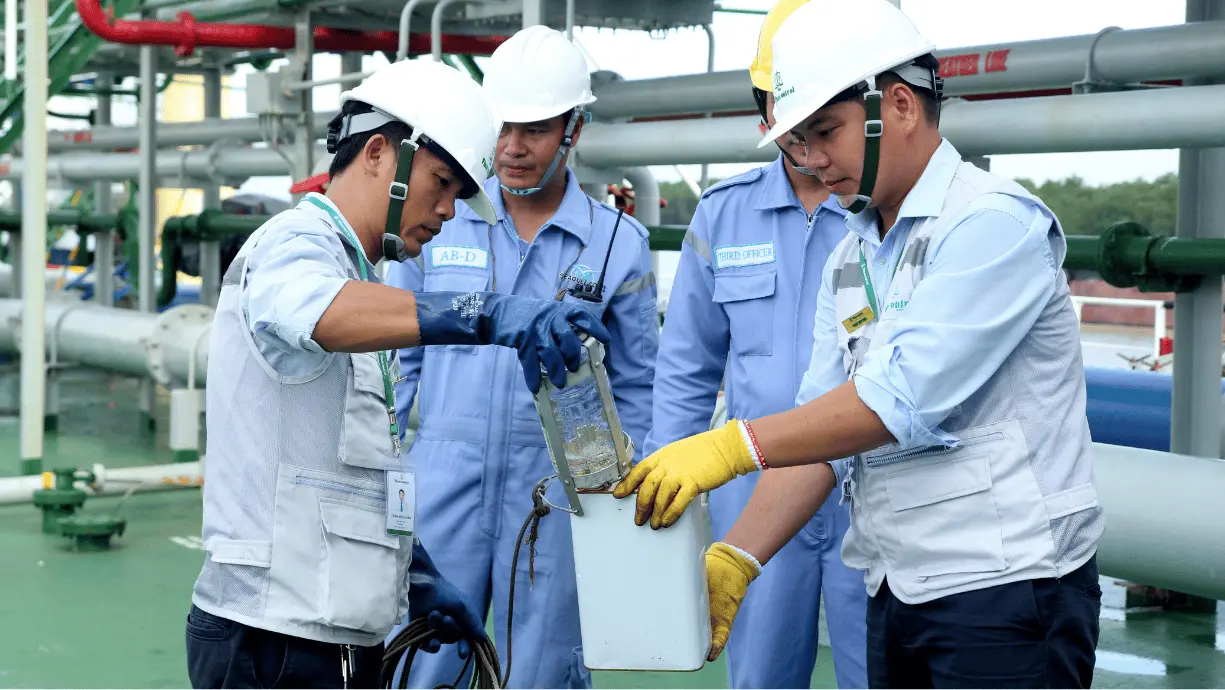
Vinacontrol inspectors performing petroleum sampling for quality analysis and testing.
Vinacontrol has a team of experienced IFIA certified inspectors working at ports, refineries and storage locations across the globe. Our inspectors are trained and equipped to perform measurements and employ appropriate sampling techniques.
Vinacontrol’s inspection certificates are recognized by domestic and international trading partners, ensuring objectivity, transparency, and legal validity, thereby protecting the rights of both buyers and sellers.