VI
VI
 EN
EN








Cleanroom Validation
Table Of Contents
Table Of Contents
Ensuring quality and safety in the working environment is extremely crucial for industries sensitive to environmental factors. Among them, cleanrooms play an indispensable role in protecting products and manufacturing processes from the impact of bacteria, dust, and other external elements. Maintaining and controlling the quality of cleanrooms not only impacts the efficiency and effectiveness of the manufacturing process but also ensures the safety and reliability of the final products.
With an understanding of the importance of maintaining cleanrooms and ensuring quality in industries such as pharmaceuticals, healthcare, electronics, food, and many others, cleanroom validation services have become an essential factor.
1. Cleanroom validation and the role of Cleanroom validation
A cleanroom is a specially designed and controlled space that is intended to minimize the presence of dust particles, bacteria, and other contaminants in the working environment. Cleanroom validation refers to the process of inspecting, assessing, and confirming the cleanliness and purity of a working environment, particularly in industries that are sensitive to environmental conditions such as healthcare, pharmaceuticals, electronics, and food. With its crucial role, cleanroom validation ensures that the working environment meets the standards for purity, safety, and regulatory compliance.
The role of cleanroom certification in sensitive industries such as pharmaceuticals, healthcare, electronics, and food is crucial to ensuring quality and safety in the work environment.
In the pharmaceutical industry, the primary concern is the purity and safety of pharmaceutical products. Cleanroom certification ensures a clean working environment free from bacteria and particles that could potentially impact the quality and effectiveness of pharmaceutical products. This helps the pharmaceutical industry meet international standards for quality and safety.
In the healthcare sector, cleanroom certification plays a decisive role in infection prevention and patient health protection. Cleanrooms are utilized in operating rooms, intensive care units, delivery rooms, and other areas of hospitals to ensure clean air and surfaces. Cleanroom certification helps assess and evaluate the effectiveness of hygiene and infection prevention measures, reducing the risk of infections and ensuring a safe environment for patients.
In the electronics industry, electronic devices and components are sensitive to bacteria, particles, and other contaminants. Cleanrooms are employed for the manufacturing, assembly, and testing of electronic products. Cleanroom certification ensures that the environment is free from pollutants and helps meet the cleanliness and purity requirements of electronic devices and products.
In the food industry, the purity and safety of products are of utmost importance. Cleanrooms are utilized in the production, processing, and packaging of food to prevent contamination and protect the quality of the products. Cleanroom certification ensures compliance with hygiene and food safety standards. These standards include controlling bacteria, particles, heavy metals, and other contaminants during the production and packaging processes.
Cleanroom certification plays a vital role in maintaining the quality and safety of sensitive industries such as pharmaceuticals, healthcare, electronics, and food. By ensuring a clean and controlled working environment, cleanroom certification contributes to the overall success and reliability of these industries, safeguarding both the products and the people involved.
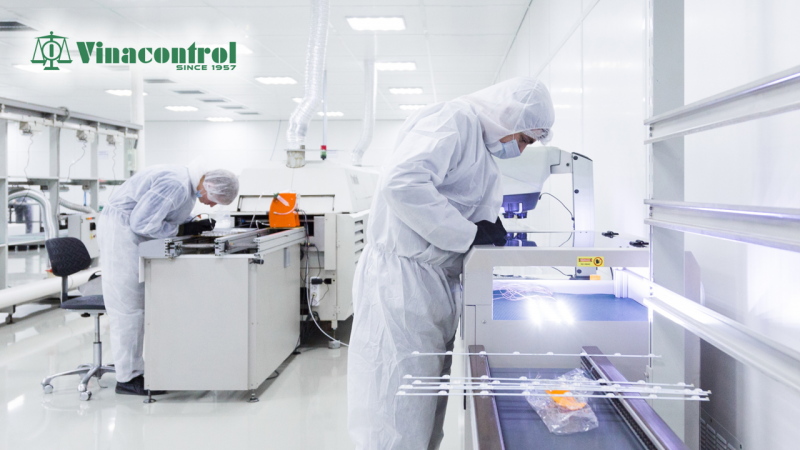
2. Some basic criteria for cleanroom validation:
- Particulate concentration: Testing and classifying cleanroom levels based on particle size (d >= 0.1, 0.2, 0.3, 0.5, 1.0, 5.0 um).
- Noise level: Measurement range (25-138 dB).
- HEPA filter leakage: Testing the leakage of HEPA filters through particle recovery efficiency.
- Airborne microorganisms: Quantifying the number of microorganisms in a sampled volume of air within the cleanroom.
- Surface microorganisms: Quantifying the number of microorganisms on sampled surfaces.
- Light intensity: Measurement range (0.1-19999) Lux - visible light intensity.
- Recovery rate: Testing the recovery time using microbial challenge and particle counting devices.
- Air pressure differentials: Pressure difference between cleanroom areas and the external environment.
- Temperature and humidity uniformity: Temperature range (-10 to 60 degrees C), humidity range (0-100% RH).
- Airflow direction: Direction of airflow supply and exhaust in the cleanroom.
- Vibration level: Displacement range (0.01-1000mm).
- Airflow rate/air exchange: Air circulation multiplier.
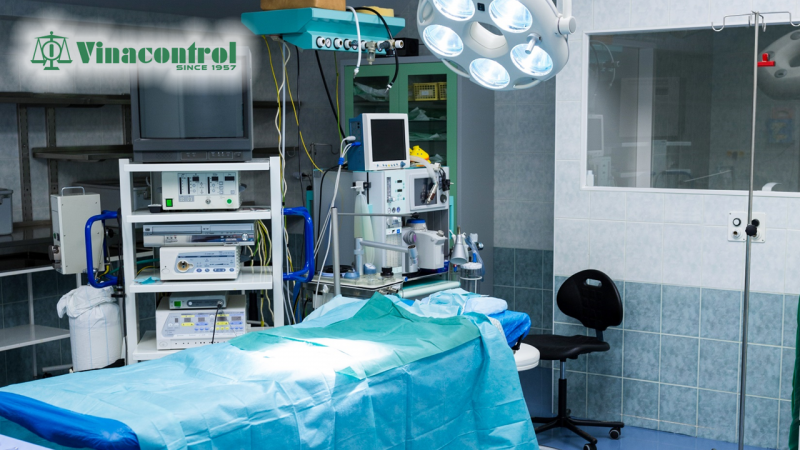
For operating rooms, the Ministry of Health specifies the cleanliness and safety requirements for sterile areas (operating rooms/cleanrooms) which need to be evaluated based on the following criteria:
- Temperature uniformity test: 20-26°C.
- Humidity uniformity test: 50-60%.
- Limit of airborne particles: Classifying cleanliness level according to ISO 14644 standards based on particle counts per cubic meter (Class 1 - Class 9).
- Limit of microorganisms: Classified based on cleanroom grades.
- Pressure differentials between rooms.
- Determining HEPA filter leakage to assess filter integrity after installation.
- Measuring air velocity.
- Measuring air flow rate.
3. Vinacontrol's cleanroom validation services
Vinacontrol provides testing and evaluation services for cleanroom quality to ensure compliance with various standards such as Healthcare Industry Standards, Ministerial Decrees, ISO 14644/TCVN 8664, TCXDVN, GMP, NEBB, FED STD 209E, and more. Vinacontrol's cleanroom certification service is the top choice for businesses and organizations seeking solutions to ensure purity and safety in their working environment.
There are several benefits for customers when using Vinacontrol's cleanroom validation services:
Firstly, customers gain an overall understanding of the cleanliness level of their working environment through detailed certification reports. This helps customers assess the current situation and identify areas for improvement to ensure effective cleanroom operations.
Secondly, Vinacontrol provides customized solutions to meet specific customer needs. Based on requirements and industry specifications, Vinacontrol designs appropriate certification procedures, ensuring compliance with international standards and meeting quality requirements.
Lastly, Vinacontrol offers prompt and flexible services, meeting customer deadlines and requirements. Vinacontrol's experienced team of experts carries out the certification process accurately and efficiently, providing customer satisfaction and trust.
With Vinacontrol's cleanroom validation services, customers can have peace of mind and assurance regarding the quality of their working environment. Vinacontrol is committed to delivering reliable and professional solutions, helping customers move towards success and sustainable development in their respective industries.
Choose Vinacontrol's cleanroom validation services to ensure a safe, pure, and reliable working environment.