VI
VI
 EN
EN










5 requirements you may not know about organic farming documentation
Table Of Contents
Table Of Contents
Organic livestock farmers are required to maintain records to demonstrate compliance with the requirements of the National Standard TCVN 11041-3:2017 on Organic Agriculture - Part 3: Organic Livestock Farming. Depending on the scale of operations and production methods for each type of product, organic farmers must develop more appropriate written documents for their facility.
Certification requirements allow for flexible adjustment of the record-keeping system based on specific activities. However, all activities must maintain detailed records to prove compliance with the organic regulations to the evaluation experts of Vinacontrol. Be prepared to work with our experts to adjust the record-keeping system to meet the mandatory requirements of organic standards.
Organic livestock farmers must comply with the following summarized organic regulations. To read the full text of the organic regulations, please refer to TCVN 11041-3:2017 on Organic Agriculture - Part 3: Organic Livestock Farming.
1. RECORD KEEPING, DOCUMENTATION, TRACEABILITY, AND PRODUCT RECALL
The purpose of record keeping is to ensure traceability throughout the entire organic production process and the ability to recall products by monitoring production data (e.g., input materials, ingredients) and quantities at each step in the supply chain, including sales.
a) Each distinct production point is identified by name or code. The name or code is assigned to the production point and recorded on the map. The name or code of the location is retained on all documents and records related to that location.
b) The facility must maintain records of purchases and inventory of all materials and inputs used for production, handling, processing, packaging, labeling, storage, and transportation.
c) Documentation and records must clearly identify the origin, transportation, use, and inventory of non-organic materials and inputs at all stages of production, handling, processing, packaging, labeling, and storage.
d) Records, documents, and databases must allow for traceability of the organic product's origin at any given time.
e) The aforementioned records (including records related to subcontractors) must be kept for at least 5 years.
2. LIVESTOCK BREED MANAGEMENT
a. Purchase and Sale Records of Livestock
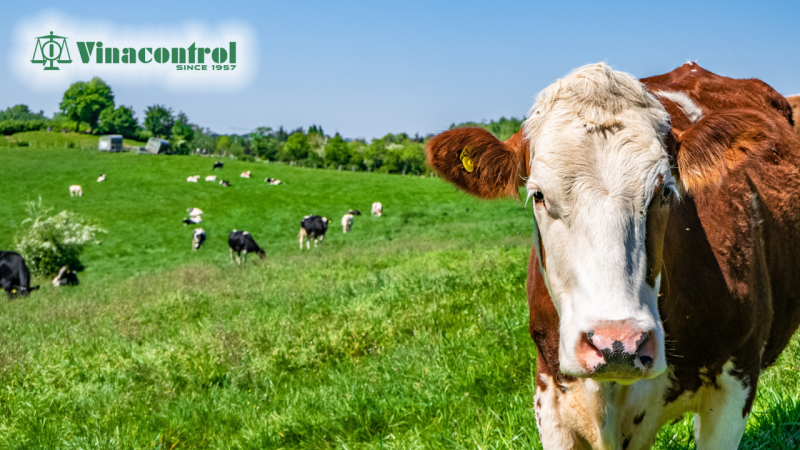
Livestock must be managed according to organic standards from the moment they are born. Maintain records to demonstrate the time of purchase, the quantity of livestock purchased, the age of the livestock at the time of purchase, and the supplier.
b. Records of Annual Changes in Livestock Numbers
These records ensure that no non-organic livestock is added to the herd. Document the number of livestock deaths or intentional removals. The number of deceased or removed livestock should be subtracted from the purchased livestock count, corresponding to the number of certified livestock. Vinacontrol may use this information to determine the actual number of livestock on your certification and ensure that no non-organic livestock is added to your herd.

This means that organic livestock must be grouped into separate herds or individually identified for easy management and monitoring. Additionally, detailed records of feed and supplements purchased and used for each stage of the animal's development must be maintained.
3. ANIMAL FEED
SELF-PRODUCED OR EXTERNALLY PURCHASED RECORDS
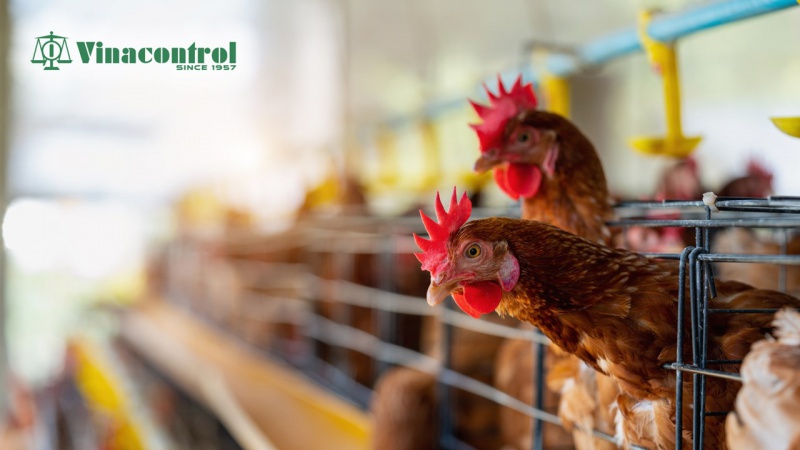
Livestock should be provided with optimal organic feed, including during the transition period. Production and/or purchase records need to demonstrate that all feed supplied is certified organic. Keep all purchase documents if possible. Ensure that the total quantity purchased is documented. Maintain records of feed ingredients, feed additives, processing aids, and purchased nutrients, including the quantity, date of purchase, and source. If on-farm feed mixing is conducted, record information for each component used. List all required supplements specified in Appendix B, TCVN 11041-3:2017, and provide reasons for their use.
Labels as a source of data, ingredient declarations, and organic feed certification information
Maintain records to prove that the feed you purchased for livestock is genuinely organic. Keep retail labels containing the disclosure "Certified Organic by [certifying organization name]" or an organic logo. This information will appear under the manufacturer's name on the packaging label. If purchasing bulk feed or feed ingredients, obtain an ingredient list for the feed formula and a copy of the organic certification from the manufacturer, in addition to the purchase invoice and delivery receipt.
Purchasing ingredients and additives used in organic feed processing
Only the permitted substances for organic feed as specified in Appendix B, TCVN 11041-3:2017 are allowed to be used. Thoroughly research these substances before use. Once approved, retain your purchase documents. Ensure that the purchase records include the names of the purchased products, quantities, dates, and supplier information.
4. ANIMAL HEALTH MANAGEMENT RECORDS
Purchasing health care products (veterinary drugs, vaccines, pharmaceuticals, etc.)
Only approved health care materials may be purchased. Check for usage allowances in any health management documentation before use. After purchase, store the purchase documents. Ensure that the purchase records include the names of the purchased products, quantities, timing, and supplier information.
Records of mortality/removal from the herd
These records provide indications of animal health. Record the quantity of animals that have died and those intentionally culled. A health care program should include controlling intermediate disease-carrying animals, including pests (e.g., external parasites, flies), and internal parasites. Control methods need to be outlined along with monitoring records and the corresponding actions taken. Measures for controlling meat-eating animals should also be recorded. Additionally, the cleanliness of equipment used, as well as sanitation and disinfection, should be maintained. Records of all cleaning agents and disinfectants used in organic livestock farming must be kept.
Any physical interventions affecting the animal's body, such as tail docking, tail tying, teeth clipping, beak trimming, and dehorning, must be recorded with an explanation of the timing and reasons for performing them.
As part of a biosecurity program, visitor access to your farm should be limited. If visitors are present, record who, when, and where they were before the visit.
5. STABLE AND FREE-RANGE CONDITIONS
Vinacontrol assessors may request specific information regarding stable and free-range conditions. Prepare the following information for your certifier. Note the following information on a diagram for any stable or free-range areas:
- Animal type
- Minimum stable area per animal (m2)
- Minimum outdoor area (excluding grazing areas) per animal (m2)
- Maximum stocking density for free-range animals, indicating the maximum number of animals per hectare, equivalent to nitrogen (N) amount of 170 kg/ha/year.
Note: Soil and water testing should be performed to monitor quality. For pastures, this would also include the types of crops and seed sources used.
6. ADDITIONAL DOCUMENTATION
For any commercial activity, the quantity of eggs, meat, or milk produced must be recorded. This documentation is mandatory for organic certification but also provides the production facility with information on production levels and early detection of any sudden declines. Additionally, daily food consumption and water intake must be monitored.
If both organic and non-organic production are carried out at the same facility, non-organic production activities must have documentation to ensure they do not affect the integrity of organic products.
It is necessary to record the type and quantity of input materials used. If bedding material is used for poultry, it must be organic material, and records must be kept to verify its organic status.
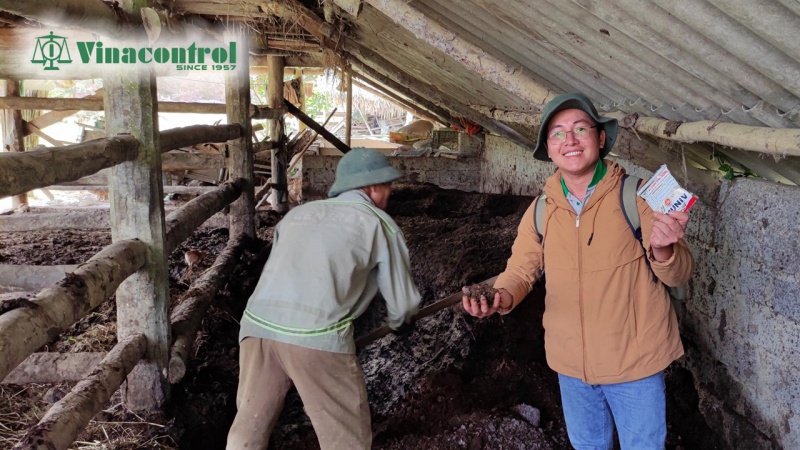
Managing composting is an important part of organic farming operations. Manure is a valuable by-product of organic livestock farming and serves as a high-quality nutrient source for organic crop production. The quantity of compost and its usage methods need to be fully documented and comply with the regulations of national technical standards for livestock wastewater used in crop cultivation.
Have we missed anything? Or would you like to know more about our organic livestock certification consulting services? Please contact Vinacontrol today, and we will have the opportunity to accompany you on your journey!